
Oncology decision support at the point of care
A digital platform designed for health systems to standardize care and support evidence-based cancer treatment decisions using personalized pathways and flexible EHR-integrated capabilities.


Complex care doesn’t need to feel complex
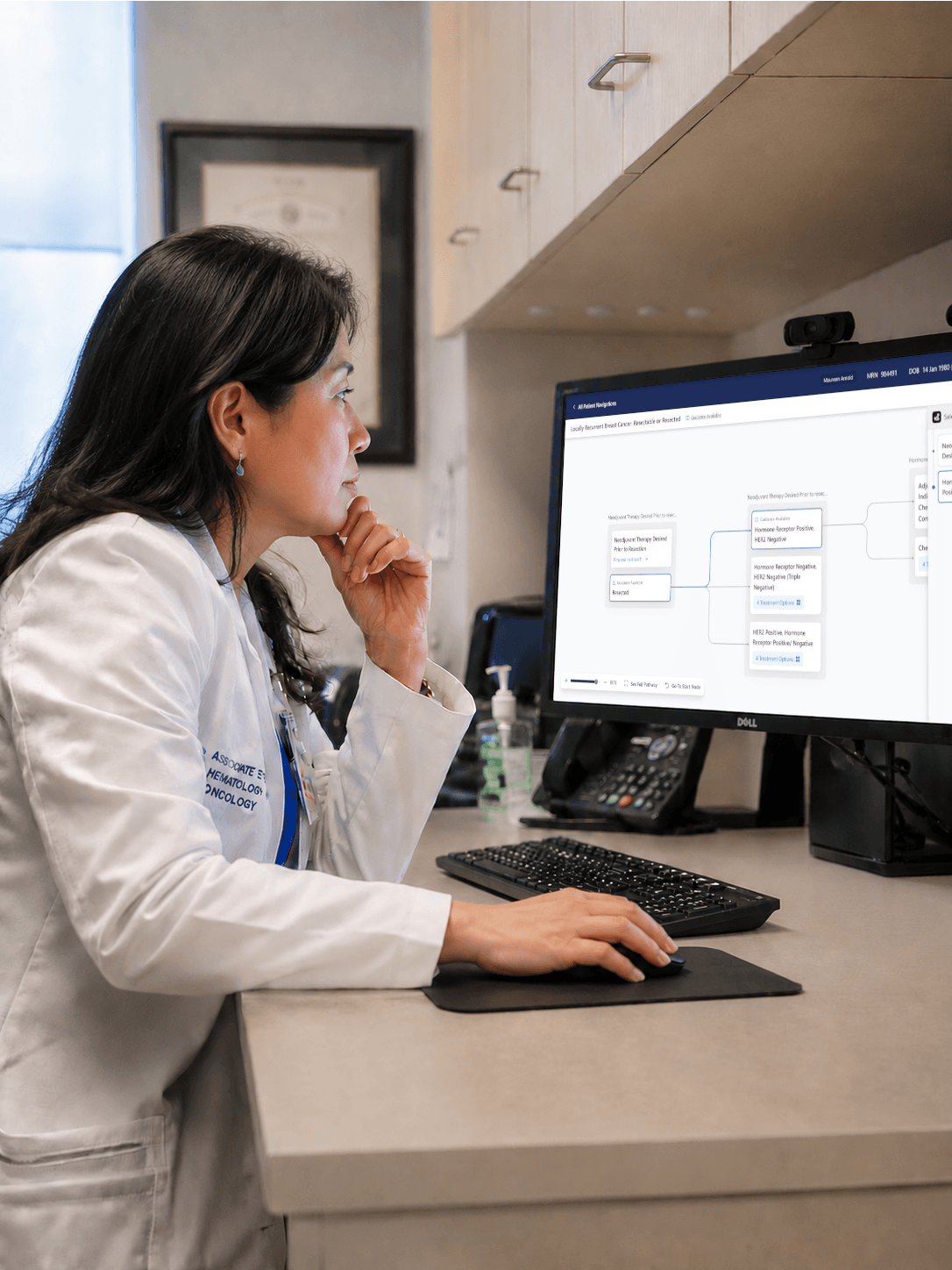
For clinicians
Fragmented health systems and evolving guidance make decisions harder to structure and validate. Solavia Decision Suite brings clarity to that process, supporting guided, evidence-based treatment within the care team’s workflow.
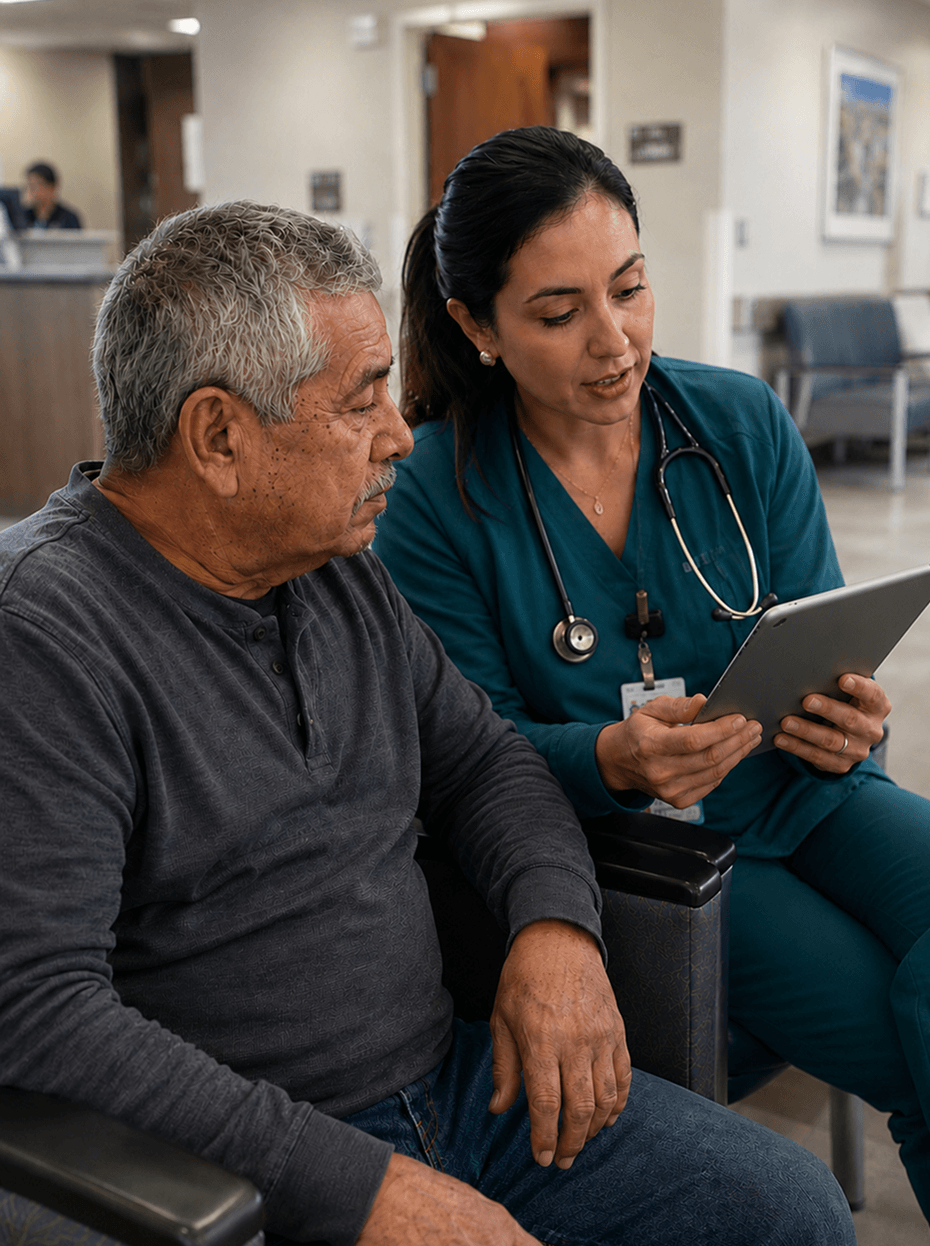
For the organization
Reliable data and consistent care are difficult to achieve without additional burden. Solavia Decision Suite aligns care delivery with structured insight to support quality, compliance, and visibility.
From evidence to real-world practice
Solavia Decision Suite provides current, evidence-based guidance for consistent, high-quality care
-
Actionable at the point of care
- Go from decision-making to placing orders within the EHR
- Reduce duplicate entry and system switching during visits
- Keep decisions, orders, and documentation aligned
-
Patient-specific decision support
- Navigate pathways tailored to patient context
- Surface relevant treatments, including clinical trials
- Receive clear rationale and actionable information
-
Trusted, continuously updated content
- Developed with leading academic cancer centers
- Grounded in the best available evidence
- Version-controlled updates ensure consistency
-
Analytics and organizational insight
- Track pathway adherence, variation, and outcomes
- Generate reliable data without added clinician burden
- Support quality initiatives, reporting, and reimbursement
How it works
-
1
Start from the EHR
Full integration with the EHR enables providers to launch the platform from within patient context
-
2
Navigate and decide
Explore pathways, review guidance, compare treatment options, and understand rationale
-
3
Deliver care
Access mapped protocols and available clinical trials in your system
-
4
Get actionable outputs
Generate treatment summaries, patient-ready consent forms, and actionable data
A community oncologist shared with me that our pathways program – the platform, the content, the review meetings, the minutes – were so beneficial that they could allow him to practice 5-10 years longer than he might have otherwise. The impact of his comments on patient continuity, faculty retention, and physician burnout framed this work as transformative.
Solavia integrates seamlessly within our medical record and always provides uniform care delivery across our broad network of hospital and community-based clinicians. Cancer therapy is evolving rapidly, and this allows our physicians to remain up to date on the latest evidence-based therapies. A few quick clicks based on the patient’s disease and disease specific characteristics guides the physician through evidence-based treatment pathways. Solavia can save time for the busy oncologist who can rely on a platform developed by disease content experts.
Frequently Asked Questions
Find answers to common questions about our platform and services.
About Solavia
Yes. Solavia continues to use the same evidence-based oncology pathways developed in partnership with Dana-Farber Cancer Institute. The content, curation process, and clinical rigor remain unchanged.
Solavia’s pathways are developed and maintained by a multidisciplinary team of oncology experts in collaboration with leading academic cancer centers, overseen by the Dana-Farber Cancer Institute.
Solavia integrates directly with your EHR system, allowing clinicians to launch the platform from within the patient record without switching applications or re-entering data.
Expert multi-institutional pathways committees are scheduled to meet 2-4 times/year for each disease to review new FDA actions, publications, presentations and system usage data. In addition, committees meet on an ad hoc basis to address urgent game-changing developments that should not wait until a scheduled meeting.
Our clinical content team monitors FDA actions, major presentations, and the peer-reviewed literature continuously. New evidence is evaluated, reviewed by clinical experts, and incorporated into pathways through a structured update process.
All pathways undergo a rigorous multi-step review process involving oncology specialists, clinical pharmacists, and evidence-based medicine experts before publication.
Solavia generates patient-ready materials including treatment summaries and consent forms that clinicians can use to facilitate informed conversations with patients about their care options.
Solavia is designed to support clinicians at multiple touchpoints: initial diagnosis and staging, tumor board preparation, treatment selection, and ongoing treatment monitoring and changes.
Most clinicians complete pathway navigation in under two minutes. Solavia is designed to support clinical decision-making efficiently, helping integrate evidence-based guidance into the visit without disrupting workflow.
Getting Started
Implementation timelines vary based on EHR complexity and institutional requirements, but most health systems go live within 8–12 weeks of contract signing.
Solavia provides comprehensive onboarding including live training sessions, on-demand video resources, and dedicated customer success support throughout the implementation and go-live period.
Clinical Content
Solavia covers a broad range of solid tumors and hematologic malignancies, including breast, lung, colorectal, prostate, and hematologic cancers. Coverage is continuously expanding based on clinical need and partner input.
Yes. Existing EHR integrations, institutional customizations, and configurations will be migrated to the Solavia platform as part of the transition process.
Yes. Relevant clinical trials available at your institution are surfaced within pathway recommendations, making it easy for clinicians to identify and discuss trial eligibility with patients.
Features & Functionality
Yes. Solavia provides administrators with dashboards and reports on pathway adherence, treatment variation, and outcomes data, supporting quality initiatives and reimbursement reporting.
Yes. Solavia can generate patient-ready treatment summaries and consent forms directly from the pathway session, reducing administrative burden and supporting informed consent workflows.
Technology & Integration
Solavia integrates with major EHR platforms including Epic, Cerner, and others via HL7 FHIR standards. Contact us to discuss your specific EHR environment.
Yes. Solavia is fully HIPAA compliant. Data is encrypted in transit and at rest, access is role-based, and the platform undergoes regular security audits and penetration testing.
Contact Us
Find out how you can bring Solavia into your workflow
We’ll look at your workflow together and explore how to best support your team.
Solavia Decision Suite is a clinical decision support tool intended to provide evidence-based information and pathway guidance to healthcare professionals. All treatment decisions remain the sole responsibility of the treating clinician.